Tuesday 10th March 2020
There is something about islands that seems to have an attraction for people. By their very nature they are isolated and need a certain amount of effort to reach. Whether travelling across the Channel to reach England, or for people living in England attempting to reach one of the many islands off its shores, there is a sense of achievement when one sets foot on an island.
Essex has a number of islands which can be reached by boat or causeway, with the biggest being Foulness. It has a certain notoriety, being owned by the MoD since 1915. Being cut off by the sea and by the MoD, Foulness holds a unique place in people’s minds. People love a mystery and Foulness holds an unending fascination for people. Called “The most dangerous road in England”, the Broomway is exposed at low tide and can look an inviting route onto Foulness. Then there is the activity of the MoD which can be heard in Whitstable as well as Clacton.
Foulness is full of surprises. Firstly, there is a civilian population of about 160 who live at the north end of the island. This civilian population is unique among MoD sites. Visitors to the island are surprised at how big it is, and empty, and charming, and teeming with wildlife. Foulness lives up to its name, being the promontory of the birds. And when the noisy neighbours finish their activities for the day the island settles down and becomes quiet.
In the village of Churchend, the old primary school has been converted into a Heritage Centre run by the Foulness Conservation and Archaeological Society (FCAS). Opened in 2003 to mark the 50th anniversary of the “Great Tide” it tells the story of Foulness through pictures, artifacts and people’s reminiscences. During this time the Heritage Centre has gained a certain reputation for its friendly atmosphere, cakes and island tours. People looking for a quiet day out where nothing happens amongst gentle surroundings, enjoy the Heritage Centre.
It could be for this reason that the FCAS was approached in the autumn of 2019 to host a VIP visit. After meetings and briefings, it was revealed that Edward, the Earl of Wessex, was one of those people who had a fascination of islands and that Foulness was to be his first visit of many around the British Isles.
So, on Tuesday 10th March members of the Foulness community readied themselves to meet the Earl and Countess of Wessex. Despite being reassured and encouraged to enjoy the day, it was nevertheless a daunting prospect for some to meet such distinguished people. Arriving by helicopter, and being greeted by the Lord Lieutenant at Churchend battery, the royal party made their way through Churchend village to the Heritage Centre. The reception party was lined up waiting for the big moment. This included The High Sheriff, Dr James Bettley, his wife Mrs Lucy Bettley, the Chairman of Rochford District Council, Councillor Robin Dray and two residents of Foulness, Mrs Ann Abbott and Mr Peter Carr, chairman of the FCAS.
On hearing the sound of a vehicle, we all craned our necks expecting to see the motorcade. Instead, it was a sewage lorry going to empty a septic tank. This immediately put our group at ease as we laughed at this mistaken identity. The royal party arrived, and after introductions Mr Carr escorted the Earl around the Heritage Centre, while Mrs Abbott escorted Countess Sophie. The Earl showed interest in the artifacts on display in the Heritage Centre. The big problem, as always with such visits, is how to fit so much in to the time allowed. As well as trying to take in the history and culture which is on offer, there are so many people to meet. And yet it shows the great professionalism of the Royal couple that they were able to put people at their ease, talk to them in a relaxed way and show such interest in what the FCAS is trying to achieve.
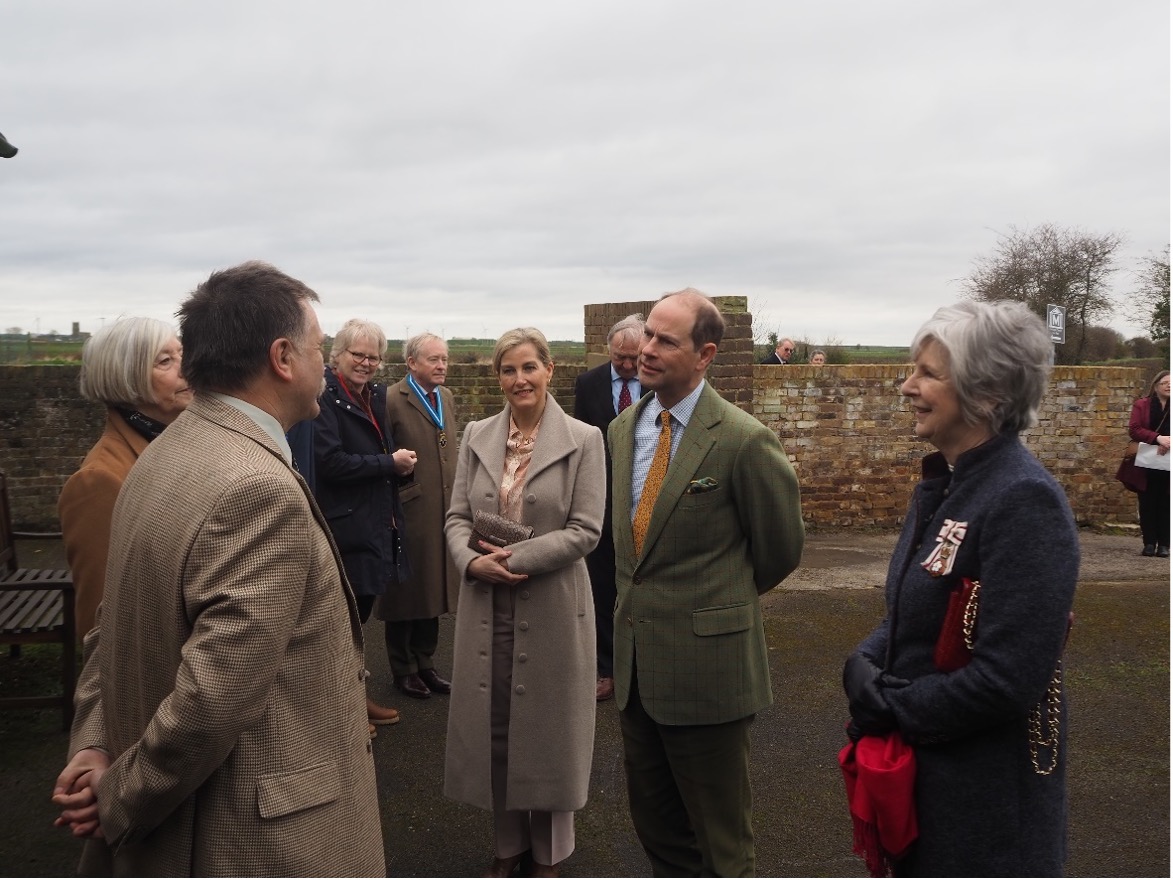
Members of the Parish Council were pleased to be introduced to their Royal Highnesses (TRH). The Chair of the council, Mrs Elaine Pitts was able to explain about how Foulness operates as a civilian enclave within an MoD site. Faced with a unique set of circumstances, it is always an interesting story to tell, and Edward and Sophie were interested enough to ask so many questions. Next to be introduced to TRH were members of the FCAS. Our president, Bob Crump, launched into a description of how the organisation began, talked about some of the archaeological findings which make up a lifetime’s work, and explained something of the history of Foulness. Poor Bob had so much to say and so little time. With time always master, the group moved on to be introduced to some of the residents of Foulness. The island has some long-established families who have lived on the island since the 18th century. It was the duty of Jenny Bowen to show TRH some of the many family trees which have been researched. During a very relaxed session, the Countess commented on the large number of children in some of the families. When it was suggested by Mr Mark Rawlings that Foulness people had nothing better to do there was general laughter. It was also pointed out that Foulness was a harsh environment with tough men living here. It was explained that there was a large turnover of wives who died through hard work, childbirth or succumbed to illness brought on by the damp climate.
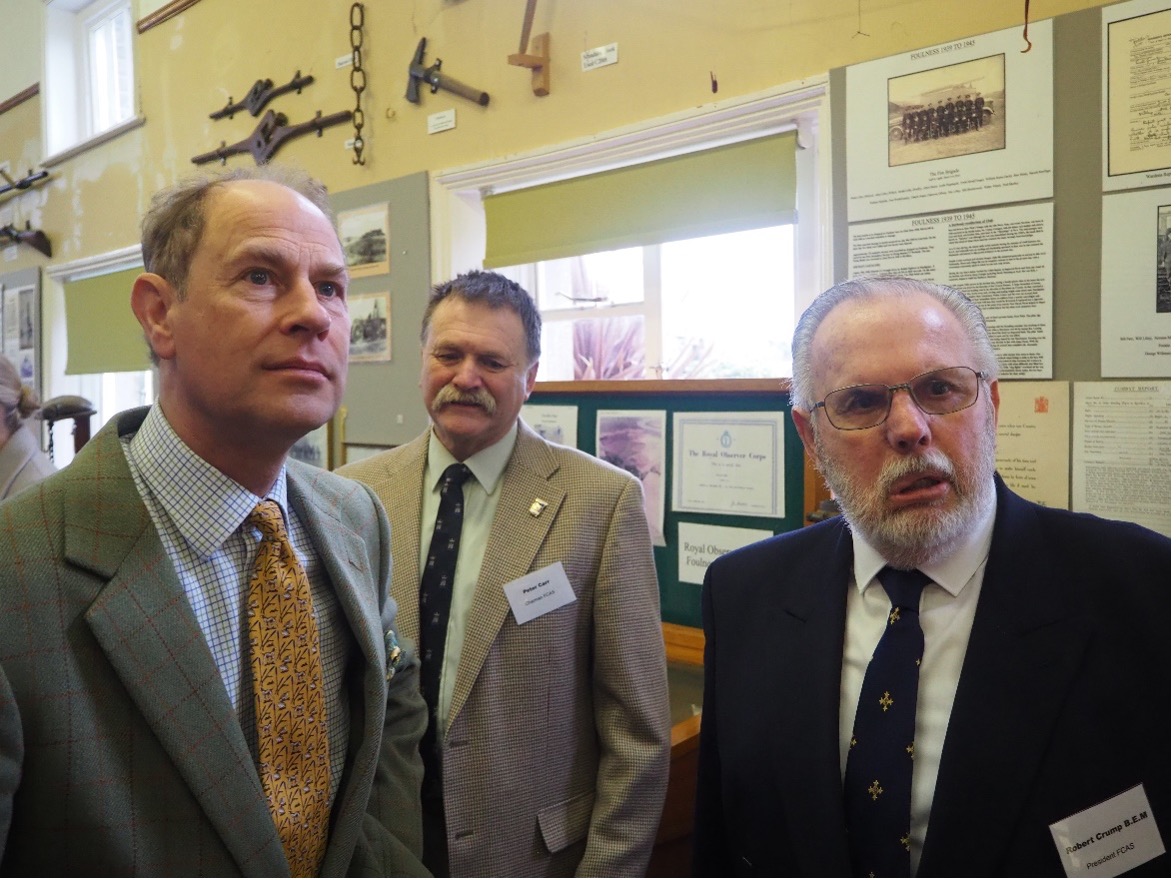
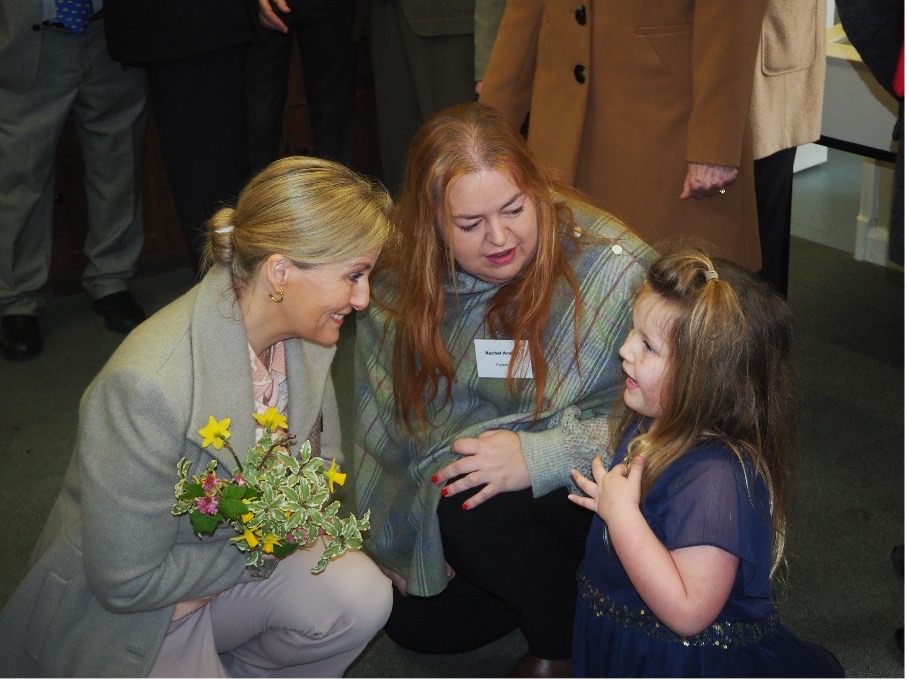
So much to see, so little time. Therefore, off to the next group. TRH were able to talk to Foulness people who worked either for the MoD or QinetiQ. Again, more questions, this time about the very special work these people do. After all this talk it was time for refreshment and the final group…the farmers of Foulness. The Burroughs family on one side of the room and the Beltons on the other, with Edward in the middle. Always outspoken, but entertaining Mr Roger Burroughs held forth on farming and living on Foulness. With cup of coffee in hand TRH mixed with this group and the occasion took on an even more informal tone. The Earl was presented with a birthday present of books about Foulness, by Miss Amelia Arnold, a 6th generation member of the Belton family. Despite her age, 4, she engaged in conversation with Sophie, and exchanged views on tortoises and other pets they had in common.
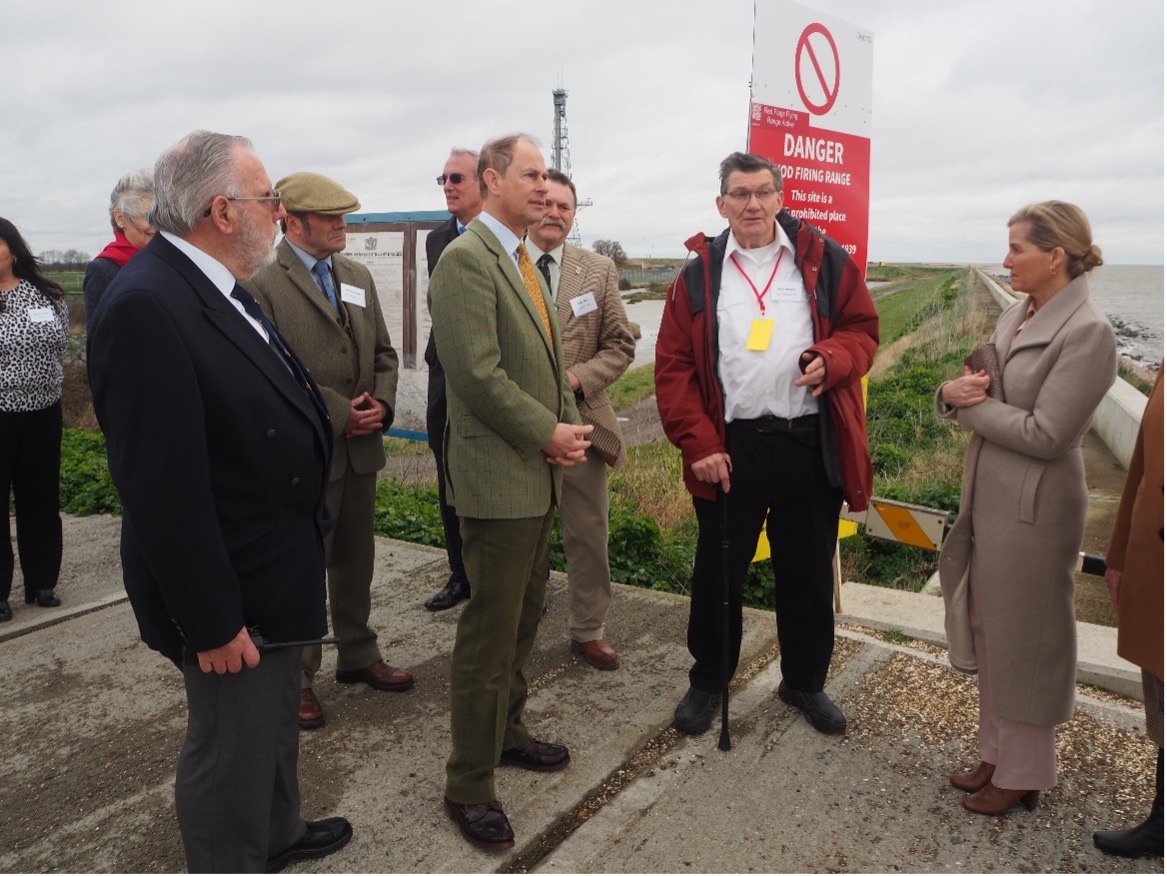
The final part of the visit was a trip to Fisherman’s Head, the final headway of the Broomway. It was decided that as the weather was rather chilly, the group would travel in comfort and not style. Instead of being taken by open trailer with straw bales as seats, transport was to be the island shoot trailer drawn by tractor and driven by Mr John Burroughs. The Earl commented that he had never seen a tractor driver looking so smart. On the way to Fisherman’s Head TRH were given a commentary on the history of Foulness and its evolution as a coastal habitat by Bob Crump, with additions by Peter Carr. Once at the headway, TRH experienced the delights of coastal living, being in the teeth of a sharp wind. Sophie looked decidedly cold and must have remembered the conversation about the hard life experienced by the women of Foulness. Mr Brian Dawson explained the historic importance of the Broomway and told of the many dangers a traveller could face. Mr John Burroughs talked about the importance of the Maplin Sands to wildlife.
With the visit almost at an end, it was time to say “Goodbye” and the royal party was taken back to their helicopter by car and so on to their next island, Mersea. Each year the English Tourist Board asks for numbers attending the Heritage Centre as part of a general survey on tourism. Usually the Heritage Centre hosts about 2500 visitors a year. The year 2020 will be remembered for being the year nothing happened. The number of visitors will be in single figures, but what a visit, and what a day!
Peter Carr